

How Much Should a Manufacturing Company Spend on IT
A realistic manufacturing company IT budget should be built around uptime, security, plant connectivity, ERP dependence, compliance expectations, and lifecycle planning, not just a generic percentage of revenue. For most manufacturers, the right budget is the one that keeps production running, reduces surprise spend, and gives leadership clear accountability for support, cybersecurity, and system reliability.
That matters because underbudgeting rarely stays invisible. It usually shows up later as downtime, rushed hardware replacements, reactive security spending, vendor sprawl, and disruption on the plant floor when systems need to work most.
For leaders evaluating options, it also helps to understand how specialized manufacturing IT services differ from generic support models. Manufacturing environments tend to have more operational dependencies, less tolerance for interruption, and more pressure to keep systems stable across both office and production workflows.
What Is a Realistic Manufacturing Company IT Budget
A realistic manufacturing company IT budget reflects business dependency, not just accounting convention. A manufacturer with one site, limited compliance pressure, and a simple application stack will budget differently than a multi-site company with ERP complexity, customer security requirements, remote access needs, and production systems that cannot tolerate downtime.
In practice, budget size is driven by how much the business relies on technology to keep orders moving, people connected, data protected, and operations recoverable after an incident. That includes office systems, plant-floor connectivity, vendor coordination, backup readiness, and the ability to support users without constant firefighting.
What usually determines manufacturing IT budget size
Manufacturers can also benefit from external guidance such as the NIST Manufacturing Profile, which helps frame cybersecurity and resilience around operational risk instead of abstract IT theory.
What a Manufacturing Company IT Budget Should Include
A complete manufacturing technology budget should usually include the following categories: 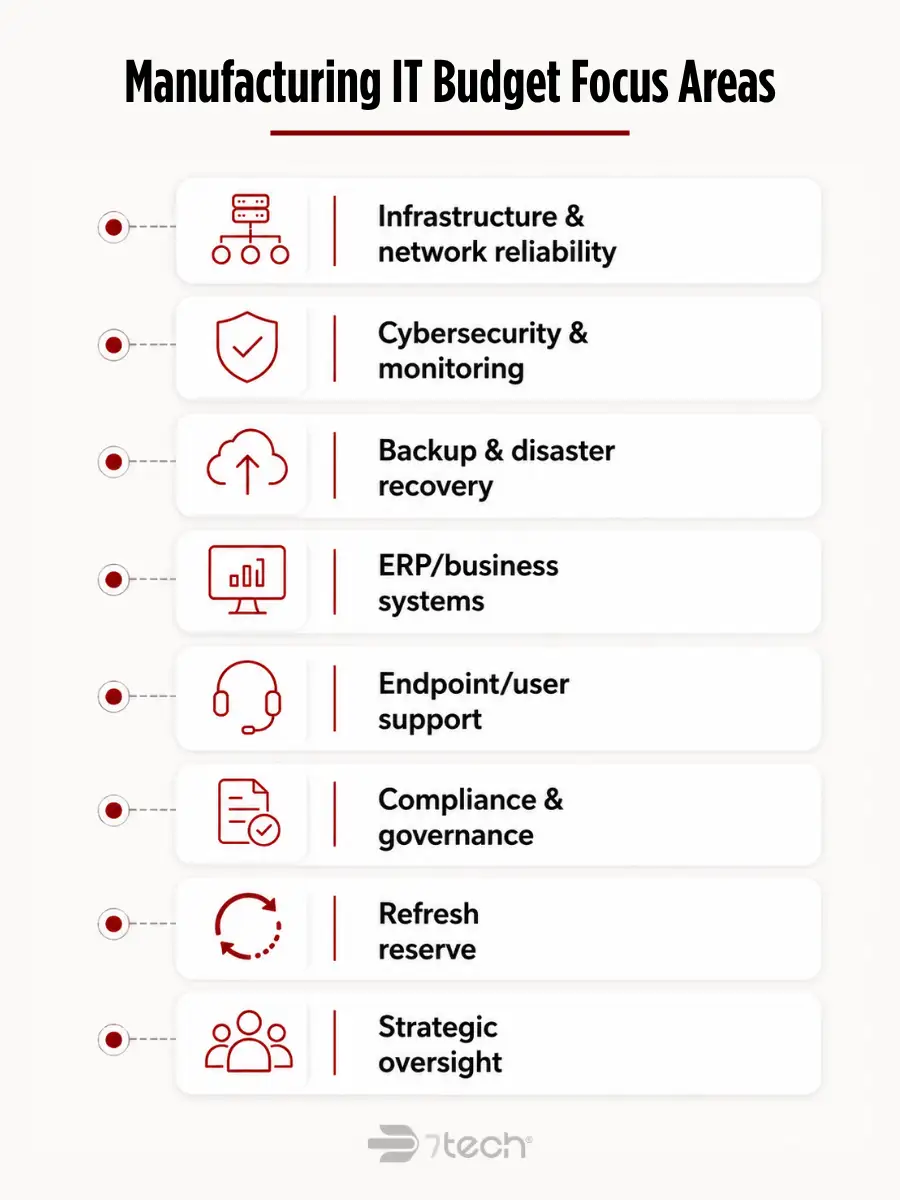
- Core infrastructure and network reliability including firewalls, switching, wireless, internet resilience, remote access, and monitoring.
- Endpoint and user support for desktops, laptops, mobile devices, onboarding, offboarding, patching, and help desk coverage.
- ERP and business systems support for availability, vendor coordination, access issues, and integration stability.
- Cybersecurity controls and monitoring such as identity protection, threat monitoring, email security, hardening, and response readiness.
- Backup and disaster recovery including recovery planning, backup testing, and protection for critical systems and data.
- Cloud and Microsoft 365 administration for licensing, configuration, access governance, and security oversight.
- Compliance and audit-readiness support where customer, insurance, or industry obligations require documentation and governance.
- Lifecycle replacement and refresh reserve for aging hardware, unsupported systems, and planned upgrades.
- Strategic oversight and vendor management so leadership is not left coordinating multiple providers without clear ownership.
For most manufacturers, these categories should not be funded equally. Infrastructure stability, cybersecurity, backup readiness, and support coverage usually deserve priority because failures in those areas can disrupt production and create larger downstream costs. That prioritization also aligns with the NIST Manufacturing Profile, which connects cybersecurity and resilience planning to operational risk in manufacturing environments.
Many budget conversations go sideways here. Leaders approve support spend but fail to reserve for refresh, recovery, monitoring, and governance. The result is a budget that looks lean on paper but behaves expensively in practice. If you want a broader planning model, this IT budget planning framework can help structure the discussion.
Why Manufacturing IT Infrastructure Has Different Budget Priorities
Manufacturing infrastructure carries a different operational burden than a typical office environment. If an office printer fails, work is inconvenient. If a network issue interrupts production visibility, order flow, or plant communications, the cost is much higher.
That is why a manufacturing IT budget should account for ERP systems, production-related systems, network reliability, on-site hardware, and the connections between business operations and the shop floor. In many environments, office workflows and plant operations still depend on the same core network, identity, and vendor relationships.
When leaders are budgeting, the better question is not “What is the cheapest support model?” It is “Which systems create immediate operational pain if they slow down, fail, or fall out of sync?” That is especially important in environments where ERP and the shop floor fall out of sync and small technology gaps create larger production issues.
Cybersecurity and Operational Technology Risks
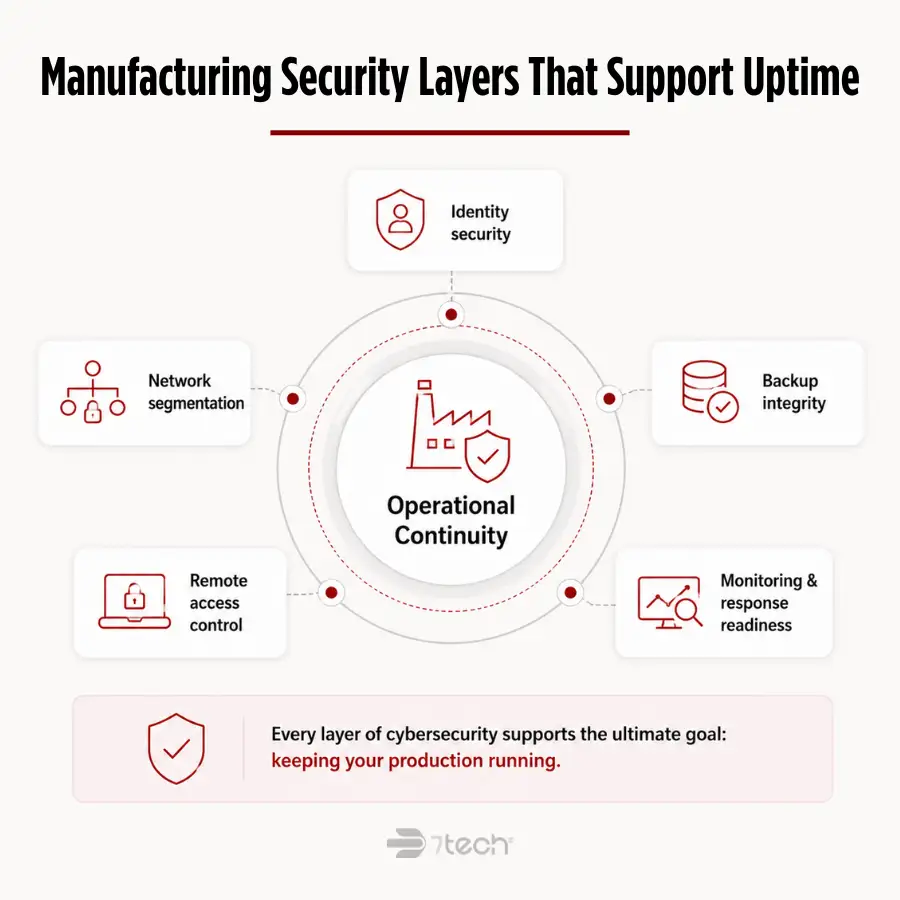
A manufacturing cybersecurity budget should cover more than antivirus and a firewall renewal.Manufacturing companies often need to budget for identity security, network segmentation, backup integrity, remote access control, ongoing monitoring, and response readiness because many production environments have OT-adjacent exposure even when the plant is not fully running on dedicated OT platforms.
This does not mean every manufacturer needs a deep OT security program on day one. It does mean the budget should recognize that weak access controls, poor segmentation, or unmonitored remote connections can increase both security risk and operational disruption.
For executives, the practical takeaway is simple: cybersecurity spending in manufacturing is part of uptime spending. That is one reason many firms prioritize guidance on protecting a manufacturing plant from ransomware and on securing OT and plant operations as part of broader planning, not as isolated projects.
Federal guidance such as CISA OT mitigations guidance also reinforces that access control, segmentation, patching discipline, and recovery readiness are operational priorities, not just technical preferences.
Downtime Cost in Manufacturing Environments
Manufacturing downtime has a way of turning “saved money” into expensive disruption. 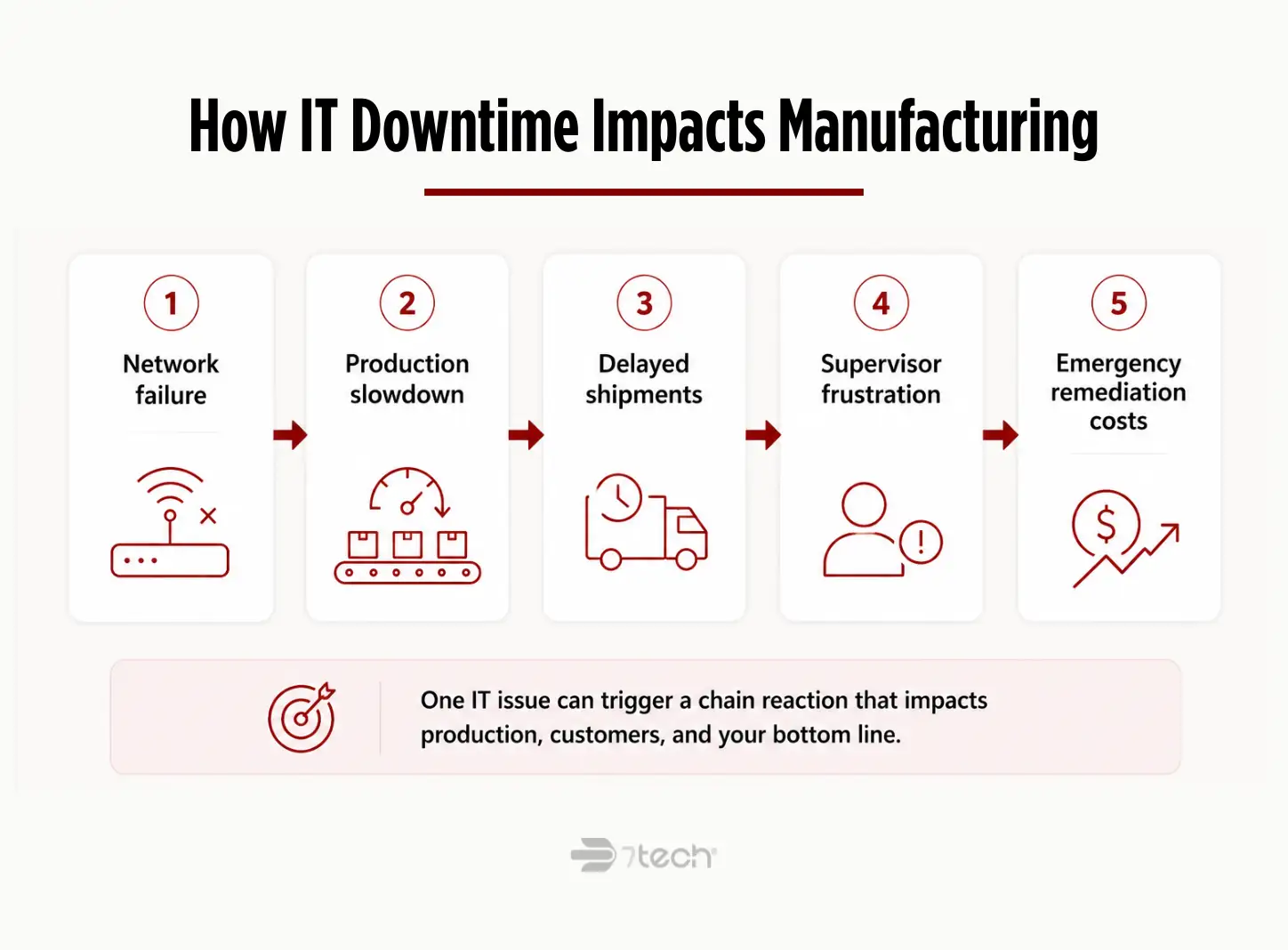 A thin IT budget can look efficient until a failed switch, unstable wireless environment, ERP issue, access problem, or ransomware event stops work, delays shipments, frustrates supervisors, and triggers emergency remediation.
Budgeting for prevention is usually more defensible than paying for disruption after the fact. In manufacturing, ordinary IT failures can affect scheduling, fulfillment, customer confidence, and leadership credibility because production systems depend on stable infrastructure and responsive support. For many teams, understanding the broader cost of IT downtime helps make that tradeoff easier to defend.
That is why resilience spending should be part of normal operating discipline. It is closely tied to reducing manufacturing downtime from network issues and to reducing unplanned downtime in manufacturing before a preventable issue reaches operations.
Compliance and Data Protection Budget Needs
Some manufacturers face direct regulatory requirements. Others feel the pressure through customer questionnaires, cyber insurance expectations, contractual security terms, or internal governance standards. Either way, compliance support often belongs in the budget long before an audit or renewal deadline appears.
That can include policy support, documentation, logging, access reviews, risk assessments, remediation planning, and executive reporting. It can also include outside guidance when internal teams are stretched too thin to maintain consistent readiness.
The planning point is straightforward: compliance costs are rarely just project costs. They usually require recurring oversight. For organizations with customer-driven security expectations or broader governance needs, dedicated compliance services may be part of a more defensible operating model.
Planning for Equipment and System Refresh
Manufacturing IT refresh planning should cover servers, firewalls, switches, wireless equipment, endpoints, software licenses, and aging production-adjacent systems that become harder to support over time. Deferred replacement may protect a short-term budget, but it often increases continuity risk and makes future spending less predictable.
A better approach is to treat refresh as a scheduled lifecycle decision. That gives leadership time to plan around support windows, production schedules, procurement timing, and security priorities instead of approving emergency invoices under pressure. It also helps reduce the kind of hidden IT costs that accumulate when aging systems stay in service too long.
Vendor lifecycle realities should shape this section of the budget. For example, the Microsoft Windows support lifecycle can help leaders understand why unsupported platforms eventually become both a security and budgeting problem.
How to Balance IT Cost Control With Uptime and Production Efficiency
The goal is not maximum spending. It is disciplined spending in the areas that protect operations. For most executives, the priorities are straightforward:
- Uptime
- Security
- Support responsiveness
- Visibility into risks and performance
- Scalability as the business grows
- Predictable cost
A lower-cost IT posture often becomes more expensive in practice when it leads to downtime, rushed replacements, staff frustration, and unclear accountability. The better target is steady operations with measured cost control, not short-term savings that weaken reliability.
For teams under pressure to improve value without increasing disruption, that often means combining refresh discipline, smarter prioritization, and selective IT cost optimization strategies rather than cutting the systems and support functions the business depends on most.
A Simple Manufacturing IT Budget Planning Framework
For executive teams, a practical manufacturing IT budget planning process can be reduced to four steps: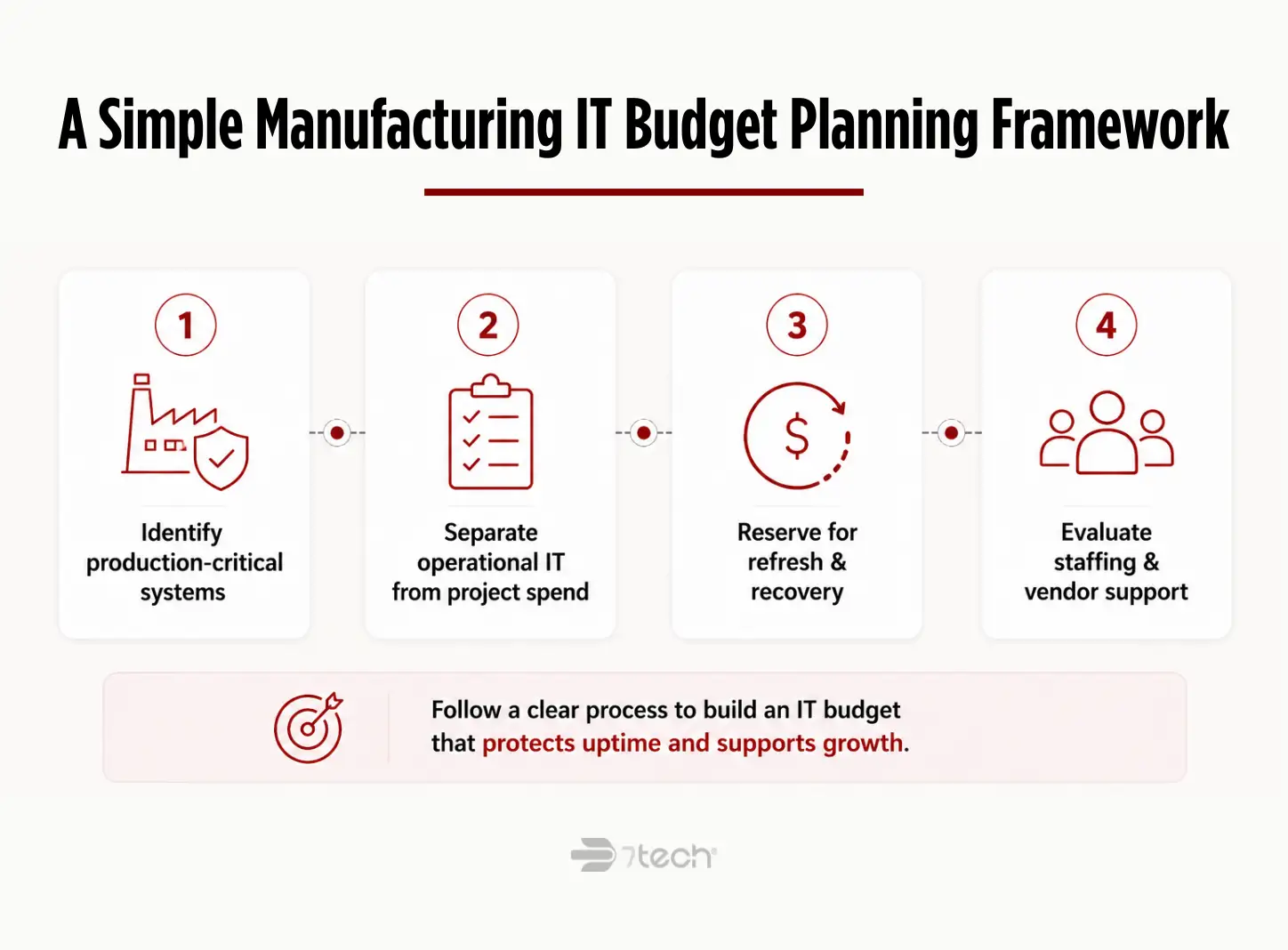
- Identify systems that stop production if they fail. Start with ERP dependencies, plant connectivity, remote access, backups, and any system that immediately affects orders, scheduling, or fulfillment.
- Separate fixed operational IT from project spend. Day-to-day support, monitoring, administration, and security should not be mixed with one-time migrations or major upgrades.
- Reserve for refresh and incident recovery. If there is no reserve for aging hardware, unsupported systems, or recovery effort, the budget is incomplete.
- Review whether current staffing and vendors can support the environment. If internal IT is stuck firefighting or too many providers share responsibility, leadership may need a clearer model. In some cases, the real question becomes MSP vs in-house IT or how managed IT services pricing compares to the cost of fragmented support.
You will know this framework is working when budget decisions are tied to business interruption, governance, and ownership instead of vague technology wish lists or last-minute exceptions. It should also become easier to measure whether support performance is improving, which is where guidance on how to evaluate IT performance can be useful.
Signs Your Manufacturing IT Budget Is Too Low
- Recurring downtime or chronic instability
- Surprise project invoices that should have been planned earlier
- Unsupported or aging hardware staying in service too long
- Reactive security upgrades only after an incident or assessment finding
- Internal IT spending most of its time firefighting
- No clear refresh cycle for network equipment or endpoints
- Too many vendors and no clear accountability for outcomes
These signs do not mean poor leadership. More often, they indicate the business outgrew an earlier budget model and now needs a structure that better reflects manufacturing risk, growth, and operational dependence on technology.
When to Reevaluate Your Manufacturing Company IT Budget
Manufacturers should revisit the budget when the business changes in ways that increase complexity or accountability. Common triggers include:
- A new plant, warehouse, or office location
- An ERP change or major business system upgrade
- New customer security requirements
- Compliance pressure from contracts, auditors, or insurers
- Cyber insurance changes that affect controls or documentation
- Rising complaints tied to downtime, performance, or support responsiveness
- Growth beyond what the current internal team or vendor mix can reasonably support
Frequently Asked Questions
How much should a manufacturing company spend on IT?
It depends on operational dependency, cybersecurity exposure, compliance needs, site count, and refresh requirements. A strong budget is based on risk and production impact, not a generic average alone.
What should be included in a manufacturing IT budget?
It should include infrastructure, user support, ERP support, cybersecurity, backups, cloud administration, compliance support where needed, refresh planning, and strategic oversight or vendor management.
Should cybersecurity be a separate line item?
Often yes. Separate visibility helps executives understand what is being spent on monitoring, identity security, backup integrity, access control, and response readiness.
How often should manufacturers refresh network hardware?
Refresh timing varies by environment and vendor support status. The key is to plan replacements on a lifecycle schedule before equipment becomes unsupported or operationally risky.
How do manufacturers budget for downtime prevention?
By funding reliability, monitoring, backups, response readiness, and planned refresh cycles. Prevention spending is usually easier to defend than emergency remediation after disruption.
Is outsourced IT more predictable than internal hiring?
It can be, especially when the business needs broader coverage, clearer accountability, and less dependence on a small internal team carrying too much complexity.
Why does ERP support affect the IT budget?
Because ERP issues often affect scheduling, inventory, reporting, and production coordination. If ERP reliability matters to operations, it belongs in the budget discussion.
What a Defensible Manufacturing IT Budget Looks Like
The best manufacturing company IT budget is not the lowest number. It is the budget that supports uptime, accountability, security, and predictable growth without leaving leadership exposed to avoidable surprises.
For manufacturing executives, the most defensible approach is to budget around operational dependency: what must stay available, what must stay secure, what must be recoverable, how refresh decisions will be funded, and who owns the outcome when issues arise. That creates a stronger planning model than chasing averages that may have little to do with your environment.
Next step
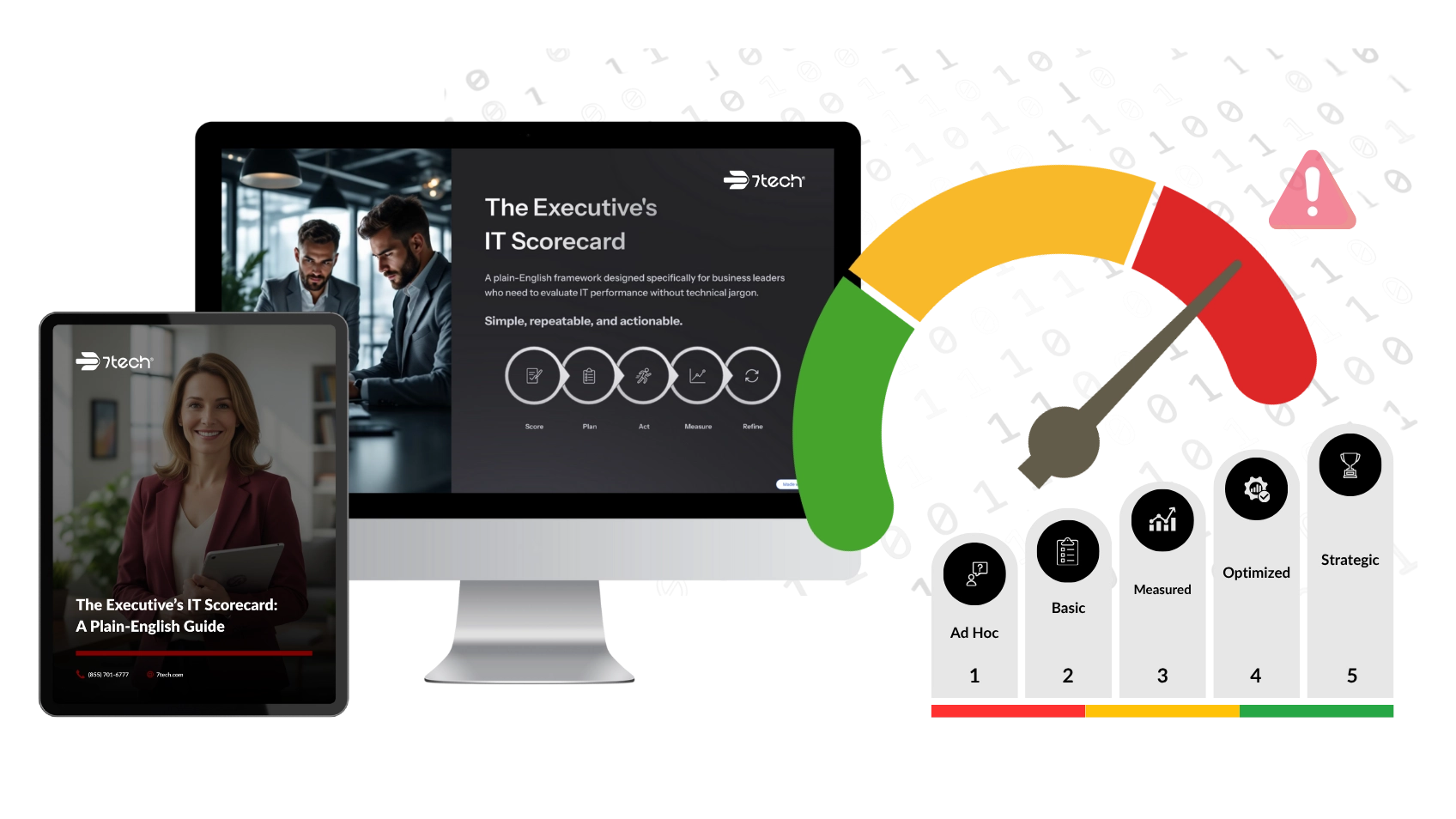
If you want a clearer view of whether your current budget supports the environment you are actually running, request the Executive IT Scorecard. It is a practical way to review IT clarity, risk, recovery readiness, and budget alignment without turning the conversation into a sales pitch.

Neal Juern, Founder and CEO of 7tech, helps business leaders take control of their IT and strengthen cybersecurity without the complexity. Since founding 7tech in 2012, he’s built it into a 5X MSP 501 winner and guided hundreds of executives toward smarter, safer operations through Managed IT Services and Managed Security Services that make sense to people outside the IT department. He speaks regularly to executive and nonprofit audiences across Texas.