
Shadow AI Is Already in Your Business
Shadow AI in business is already happening inside most organizations, whether leadership realizes it or not. Employees are using tools like ChatGPT, Claude, Gemini, browser extensions, and AI-powered apps to work faster, summarize information, analyze documents, and automate tasks. The problem is most businesses have little visibility into what data is being shared, where it is going, or whether sensitive company information is being exposed in the process.
That is the real risk behind Shadow AI.
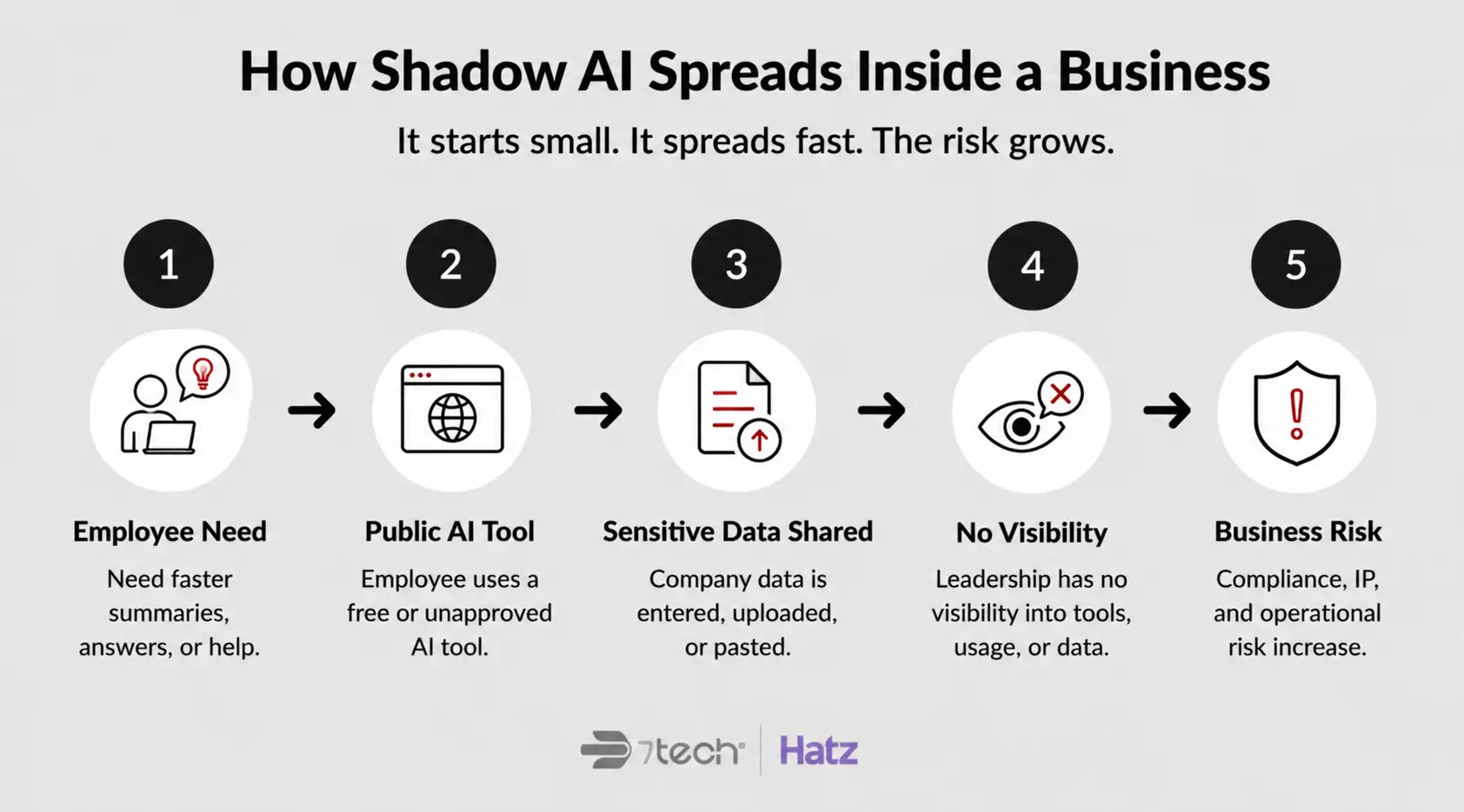
Shadow AI happens when employees use artificial intelligence tools outside approved business systems, governance policies, or IT oversight. In many cases, employees are not acting maliciously. They are trying to improve productivity and move faster. But without clear guardrails, businesses can lose visibility into confidential information, operational workflows, compliance exposure, and intellectual property risks.
For executives, this is not simply an IT issue. It is a governance, compliance, and business continuity issue.
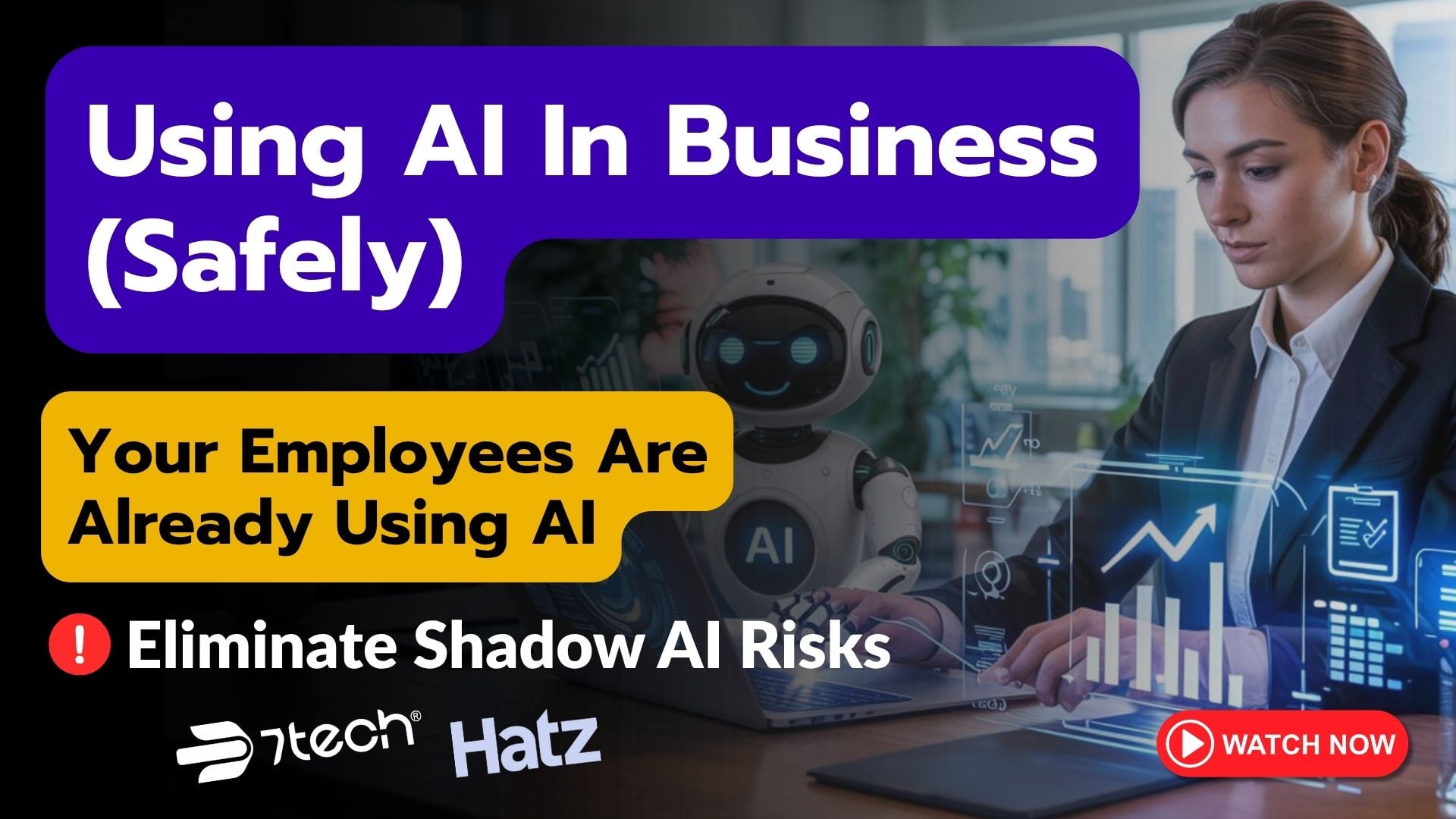
In the webinar above, I break down:
- Why Shadow AI in business is spreading so quickly
- How public AI tools create hidden data exposure
- Why banning AI usually fails
- How businesses regain visibility and control
- A practical framework for secure AI adoption
- Why executive oversight matters before AI usage scales further
If you want the full walkthrough, watch the webinar before or after reading this article.
You can also explore our related guide:
How to Adopt AI Securely for Business
What Is Shadow AI in Business?
Shadow AI in business refers to employees using AI tools without formal company approval, governance, or oversight.
In practice, it often starts with simple productivity tasks:
- Pasting meeting notes into ChatGPT for summaries
- Uploading spreadsheets into AI tools for analysis
- Using personal AI accounts to draft customer communication
- Installing AI browser extensions without IT review
- Connecting AI assistants directly into business workflows
At first, these actions may appear harmless.
The problem is leadership often has no visibility into:
- Which AI tools employees are using
- What company data is being entered
- Whether the platforms retain submitted data
- How information is being stored or processed
- Whether compliance requirements are being violated
- Who owns accountability for AI usage
This closely mirrors the rise of Shadow IT years ago, when employees adopted unauthorized software and cloud platforms outside approved systems.
The difference is AI tools can process, summarize, store, learn from, and redistribute business information at massive scale.
That raises the stakes considerably.
Why Shadow AI in Business Is Growing So Quickly
Most employees are not resisting AI adoption.
They are actively experimenting with it because they immediately see operational value.
Employees want tools that help them:
- Work faster
- Reduce repetitive tasks
- Handle larger workloads
- Improve output quality
- Save time during busy operational periods
- Stay competitive in an AI-driven workplace
“I wouldn’t worry about AI replacing you nearly as much as I would worry about a technician using AI replacing you.”
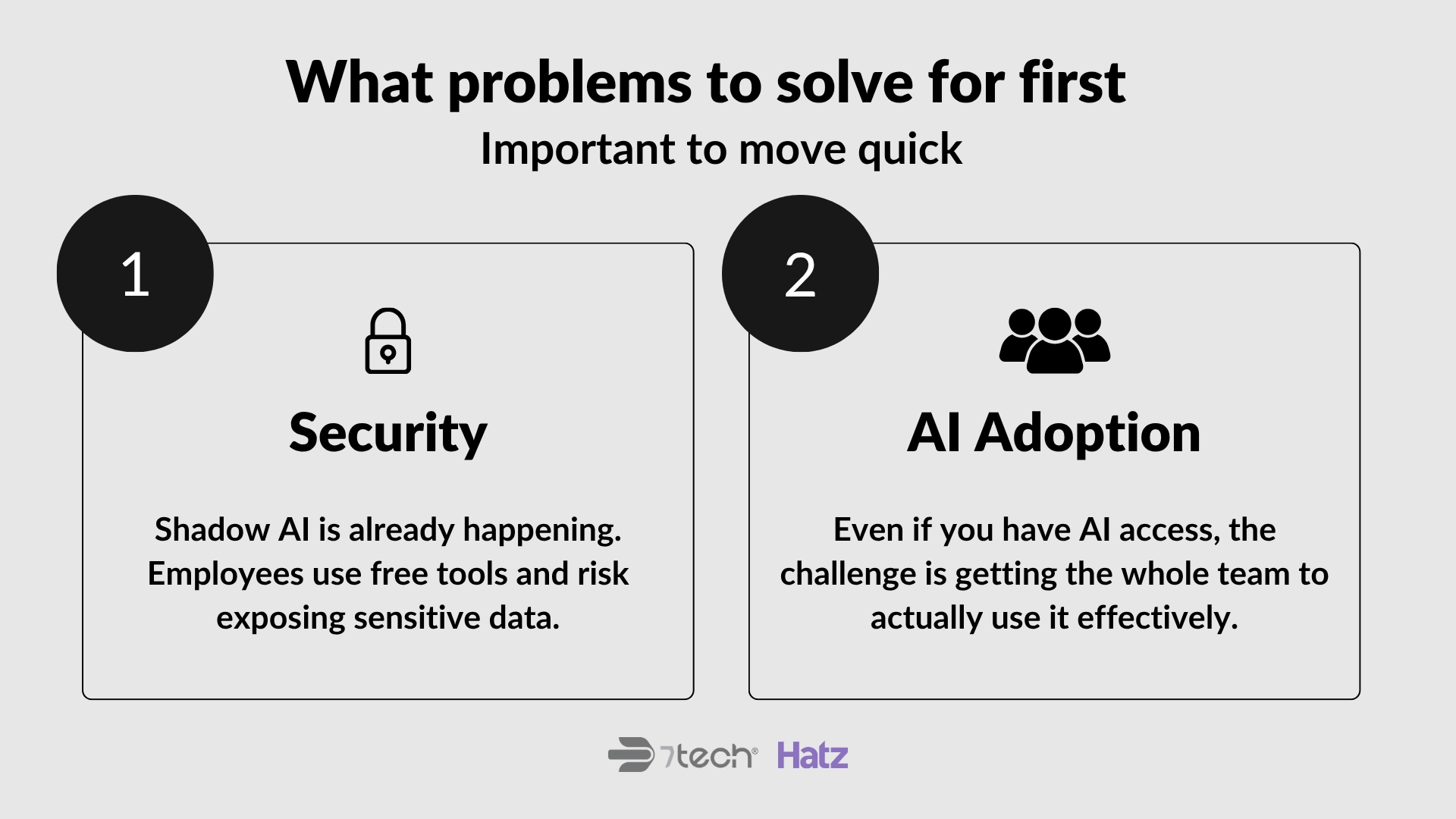
Businesses are seeing employees independently adopt AI because the productivity gains are obvious. When leadership fails to provide a secure, approved path for adoption, employees often create their own workflows using public tools.
That is when visibility disappears.
How Public AI Tools Create Hidden Business Risk
Many public AI platforms improve their models using submitted user data.
That means employees may unknowingly expose confidential business information inside systems designed to process, retain, or learn from that information.
This becomes especially risky when employees use: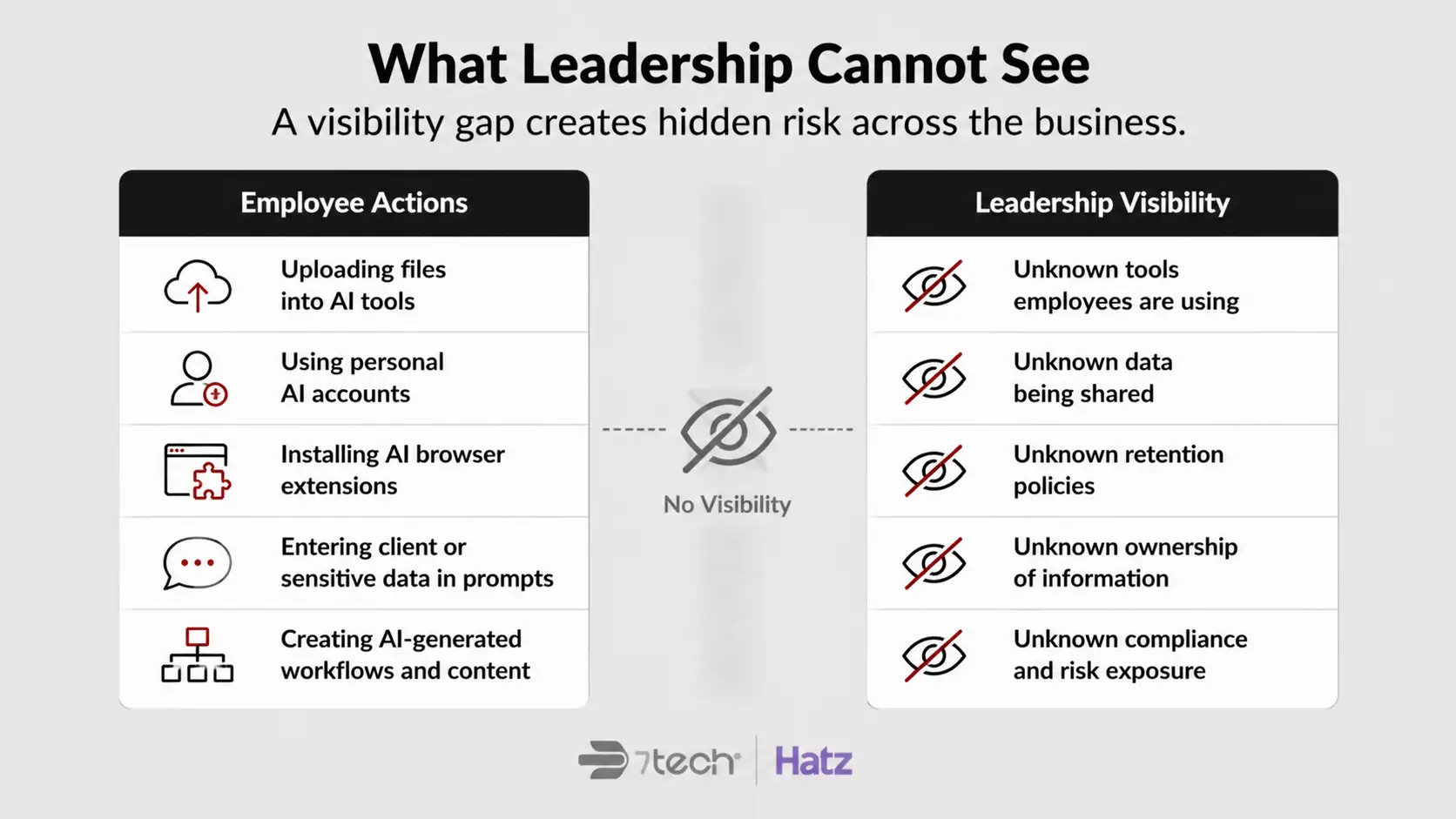
- Free AI tools
- Personal AI accounts
- Unsanctioned browser extensions
- Consumer AI applications
- Public AI chatbots
- AI meeting assistants without governance controls
The exposure risks are larger than many executives realize.
Sensitive business information may include:
- Financial reports
- Legal documents
- Client information
- Trade secrets
- Internal procedures
- Pricing models
- Compliance-related data
- Healthcare information
- Operational workflows
One of the biggest governance issues is ownership.
When employees use personal AI accounts, company information may remain associated with those personal accounts permanently.
In other words, intellectual property can leave the organization with the employee.
Most Businesses Already Have More AI Usage Than They Think
One of the biggest mistakes executives make is assuming AI adoption has not started inside their business yet.
In reality, it often already has.
Here’s an example of a company that believed AI usage was minimal. After reviewing activity logs, leadership discovered employees had performed more than 4,000 AI queries in just 30 days across unapproved platforms.
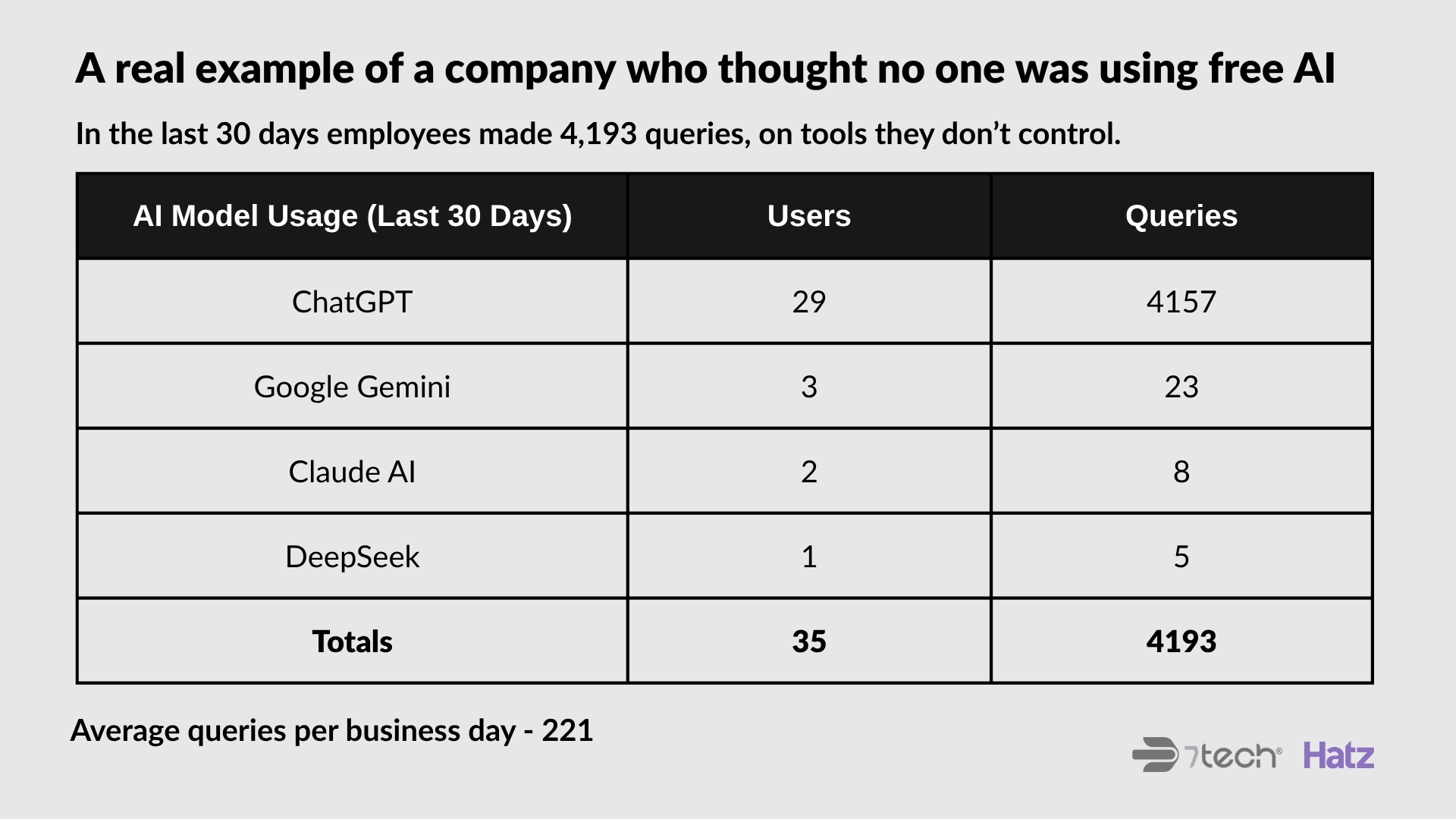
That is what makes Shadow AI in business difficult to control.
It spreads quietly.
By the time leadership notices:
- Departments may already depend on it
- Sensitive data may already be exposed
- Employees may already have unmanaged workflows
- AI-generated content may already influence operations
- Informal AI habits may already be deeply embedded
This is why visibility matters first.
You cannot govern AI usage you cannot see.
Why Banning AI Usually Fails
Some businesses respond to Shadow AI by trying to block AI tools entirely.
That approach rarely works long term.
Employees still want productivity improvements. Teams still face pressure to move faster. Departments still need operational efficiency.
If businesses fail to provide approved AI solutions, employees often create workarounds anyway.
That creates even less visibility and even greater risk.
The businesses succeeding with AI adoption are not eliminating AI usage.
They are creating structure around it.
- Approved AI platforms
- AI governance policies
- Employee training
- Usage visibility
- Access controls
- Data protection standards
- Defined business use cases
- Monitoring and oversight
How Businesses Regain Visibility and Control
One of the smartest ways to reduce Shadow AI risk is by creating a sanctioned AI environment employees actually want to use.
That is one reason 7tech partnered with Hatz.
Hatz also provides secure access to multiple AI models, including ChatGPT, Claude, Gemini, and others.
The goal is not simply adding another AI tool.
The goal is moving businesses from unmanaged experimentation toward structured, secure AI adoption.
The Safest Way to Adopt AI Inside a Growing Business
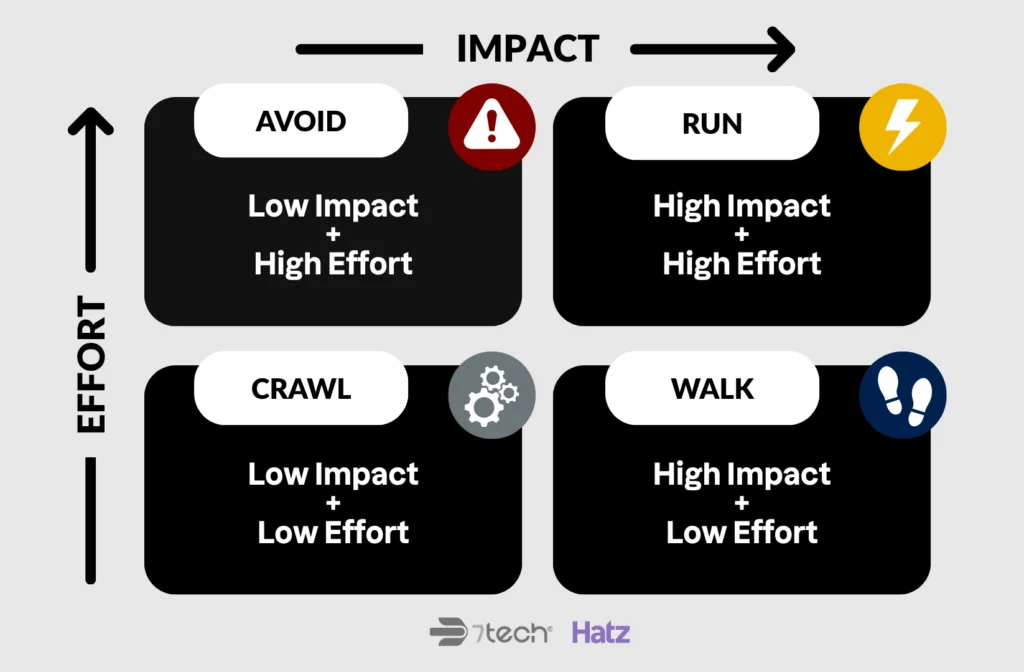
Crawl Phase
Start with low-risk, high-value use cases.
- Research
- Summaries
- Brainstorming
- Internal productivity tasks
- Document analysis
- File organization
Walk Phase
Begin integrating AI into operational workflows.
- CRM integrations
- Reporting automation
- Meeting summaries
- Internal assistants
- Workflow automation
- Knowledge management
Run Phase
Deploy more advanced AI systems aligned to specific business operations.
- Autonomous AI agents
- Department-specific automation
- AI-driven operational workflows
- Industry-specific AI solutions
- Advanced process orchestration
This phased rollout strategy closely mirrors Microsoft’s guidance for responsible AI adoption inside growing organizations.
AI Agents Create New Risks Businesses Should Not Ignore
AI agents are powerful.
They can also create major security exposure when deployed carelessly.
Businesses should avoid installing autonomous AI agents directly onto employee production devices without governance controls.
Those agents may gain access to:
- Email accounts
- Browser sessions
- Company files
- Internal systems
- Password managers
- Sensitive operational data
This is why businesses should apply the principle of least privilege.
AI systems should only access exactly what they require to perform their assigned task. Security teams evaluating AI-related exposure should also review the OWASP Top 10 for LLM Applications for emerging risks tied to AI systems and autonomous agents.
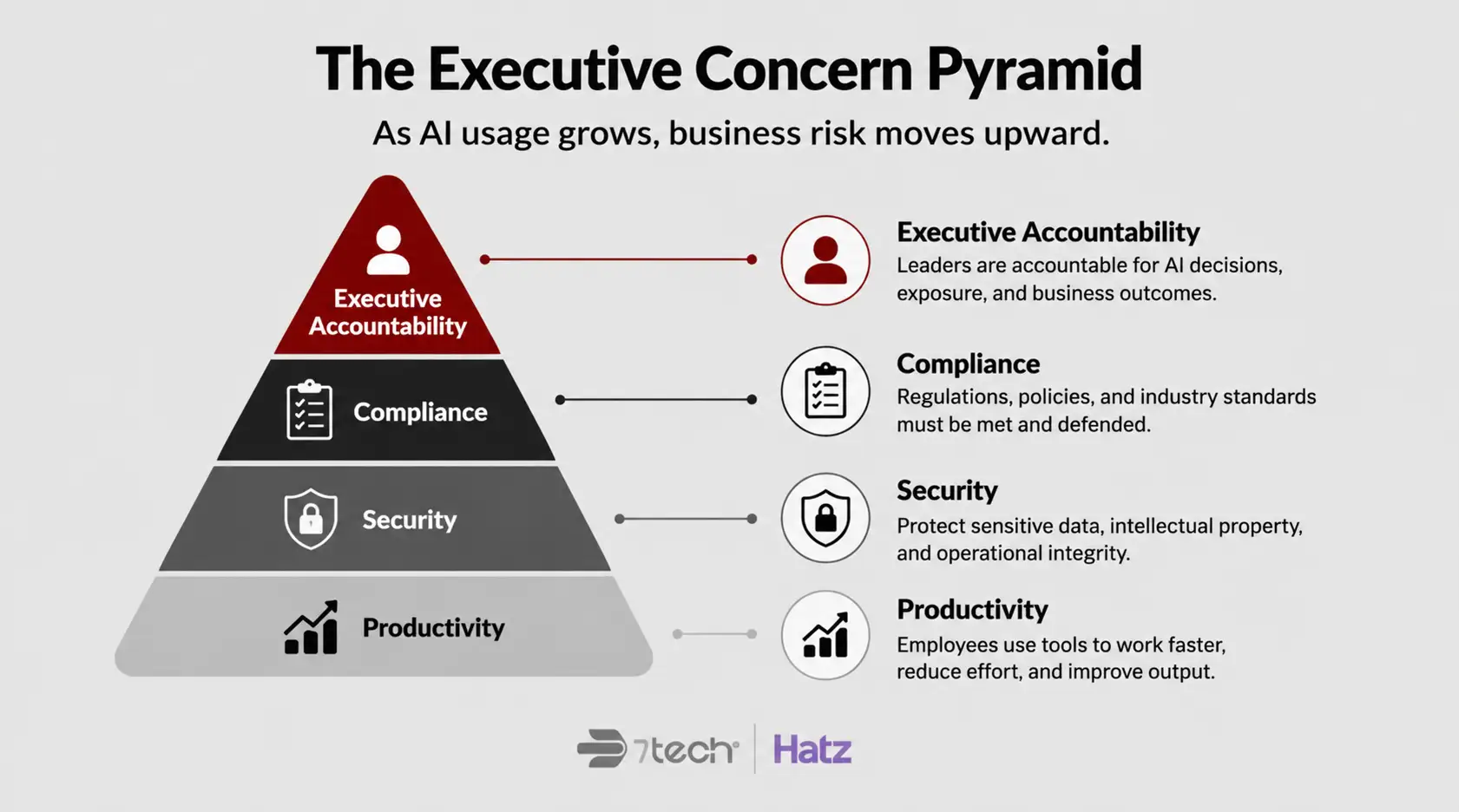
Why Executive Oversight Matters More Than Ever
Shadow AI in business is not simply a technology trend.
It is rapidly becoming an executive accountability issue. Many organizations are now aligning their governance strategies with the NIST AI Risk Management Framework to improve visibility, accountability, and risk management around AI usage.
Leadership teams increasingly face pressure around:
- Data governance
- Compliance readiness
- Cybersecurity exposure
- Intellectual property protection
- Operational visibility
- Vendor accountability
- AI governance expectations
Most executives are not worried about AI itself.
They are worried about being blindsided.
Why 7tech Helps Businesses Adopt AI More Safely
Businesses do not just need another AI platform.
They need a governance strategy that balances innovation with operational control.
At 7tech, we help organizations:
- Reduce Shadow AI exposure
- Create visibility into AI usage
- Build secure adoption processes
- Protect sensitive company information
- Develop structured rollout plans
- Train employees responsibly
- Improve governance readiness
“Their professionalism and accountability allow us to focus on our clients like never before.”
— Richard Singleton, CEO, STARRY
“They take the time to make complex requirements understandable and manageable.”
— Jennifer Jorrie, Compliance Director, Affordable Health Insurance Agency
Frequently Asked Questions About Shadow AI in Business
What is Shadow AI in business?
Shadow AI in business refers to employees using AI tools without formal company approval, governance, or oversight.
Why is Shadow AI dangerous for businesses?
Shadow AI can expose confidential data, create compliance risk, reduce operational visibility, and allow unmanaged AI workflows to spread across departments.
Can businesses completely stop employees from using AI?
Usually not. Most employees will continue experimenting with AI unless businesses provide approved alternatives and clear governance policies.
What is the safest way to reduce Shadow AI risk?
Create an approved AI environment, define governance policies, provide employee training, and improve visibility into AI usage patterns.
Why are personal AI accounts risky for businesses?
Company information entered into personal AI accounts may remain associated with the employee permanently, creating intellectual property and compliance concerns.
Should businesses ban public AI tools completely?
In most cases, no. Controlled adoption with governance and approved platforms is usually more effective than outright bans.
What industries face the highest Shadow AI risk?
Highly regulated industries like healthcare, finance, legal, manufacturing, and government contracting often face elevated compliance and data governance exposure.
How Business Leaders Can Regain Visibility Into AI Usage
AI is already entering most businesses.
The real question is whether your organization has enough visibility and governance before unmanaged usage creates larger operational, compliance, or cybersecurity problems.
Our Executive AI Visibility Review is a 45-minute executive-level business conversation designed to help leadership understand:
-
- Where AI may already exist inside the organization
- Where operational exposure may be developing
- What visibility gaps currently exist
- Which governance risks deserve attention first
- What a safer next step should look like
This is not a technical audit or software demo.
It is a strategic conversation focused on clarity, accountability, and practical next steps for leadership teams navigating AI adoption responsibly.
Call (855) 701-6777 to Schedule Your Executive AI Visibility Review Today!

Neal Juern, Founder and CEO of 7tech, helps business leaders take control of their IT and strengthen cybersecurity without the complexity. Since founding 7tech in 2012, he’s built it into a 5X MSP 501 winner and guided hundreds of executives toward smarter, safer operations through Managed IT Services and Managed Security Services that make sense to people outside the IT department. He speaks regularly to executive and nonprofit audiences across Texas.