
Choosing AI Tools: The Mistake Most Construction Businesses Make
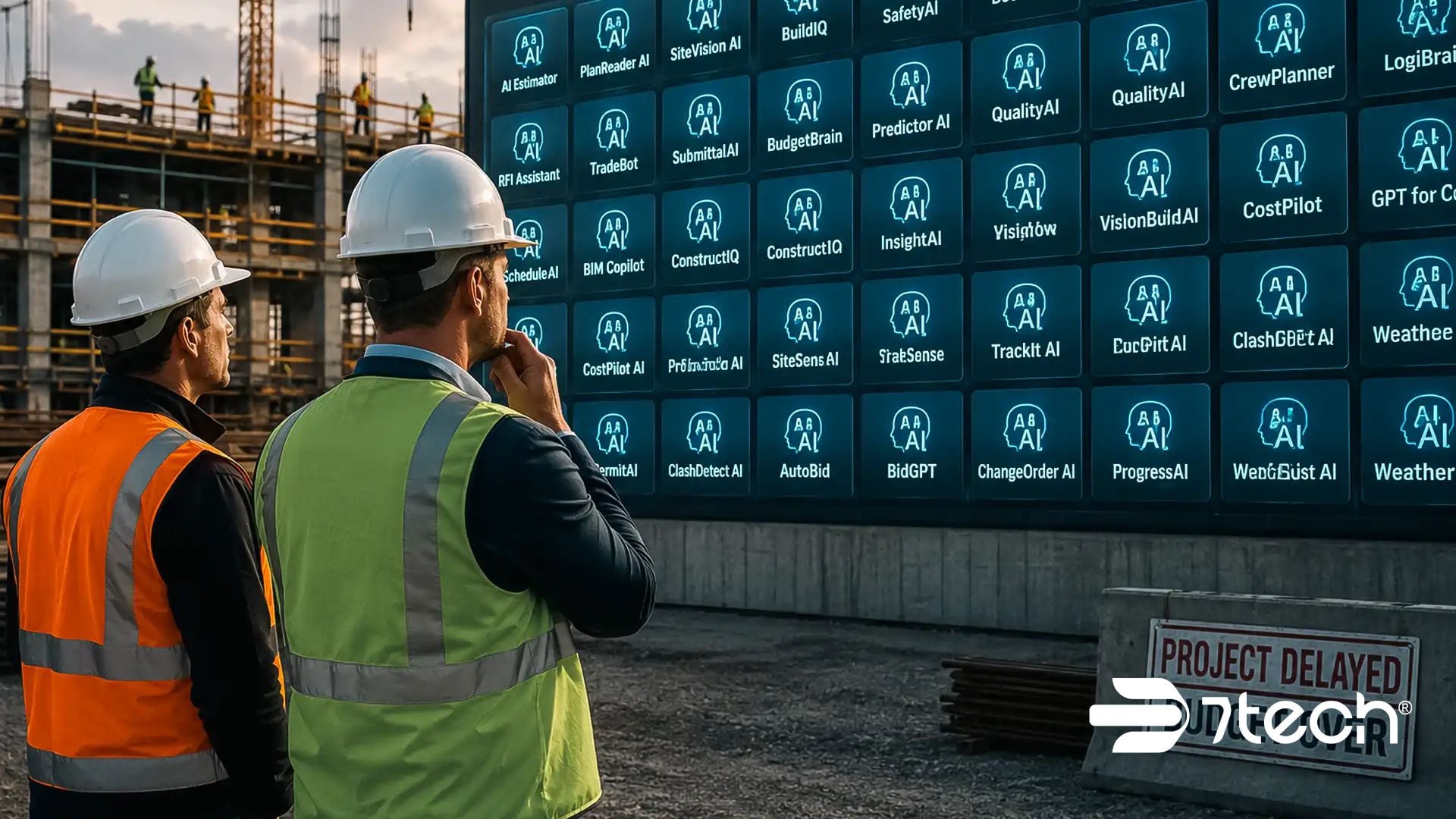
Choosing AI tools for construction should start with an operational problem, not a product. The most common mistake contractors make is buying AI because of its features, popularity or perceived urgency before defining what it needs to improve. A stronger approach is to identify where project teams are losing time, establish what success looks like, then evaluate AI tools based on fit, security, adoption and measurable value across estimating, project management and field operations.
The California Gold Rush of 1848 promised one thing: opportunity.
Hundreds of thousands of people headed west hoping to strike it rich. Some found gold. Many spent months chasing an opportunity that never paid off.
Yet some of the people who built lasting businesses were not chasing gold at all. They were selling the picks, shovels and supplies miners needed.
There is a useful lesson in that story for contractors today: opportunity does not create value unless you understand the problem you are trying to solve.
AI is today’s gold rush. New tools appear constantly. Vendors promise faster and easier ways to work, and general contractors and subcontractors are trying to determine where AI fits across estimating, project management, field operations and the office.
That creates an expensive temptation: find an AI tool, buy it and figure out the operational case later.
Contractors should do the opposite.
Why Choosing AI Tools for Construction Should Not Start With the Tool
Most contractors have already seen technology investments fail to deliver what was promised.
Maybe it was a project management platform employees never fully adopted. Maybe it was an estimating or field application that did not fit the way the team worked. Or perhaps another system simply created more work without eliminating the operational problem it was supposed to solve.
AI can create the same outcome.
The difference is that the pressure to act is greater, the marketing is more aggressive and the range of possibilities can make almost any product sound transformational.
But a new AI tool does not automatically create a better construction process.
It creates value when it solves a defined operational problem, fits the contractor’s existing technology environment and produces an outcome leadership can recognize.
That might mean reducing repetitive project administration, helping employees find information faster, shortening reporting time or eliminating manual steps between disconnected systems. Contractors exploring those opportunities can also review practical ways to use AI productivity tools before deciding whether a specific platform fits the way their teams work.
If leadership cannot clearly explain what should improve after implementing the tool, the company may not yet have a strong business case.
The miners who rushed to California had excitement and urgency.
What many did not have was a plan.
Your AI strategy needs one.
Where Can AI Create Real Value in Construction?
The best AI opportunities are often less futuristic than contractors expect.
Instead of beginning with questions about what AI might eventually transform, look at the work already consuming project teams’ time today.
Listen for the phrase:
“There has to be a faster way to do this.”
That is often where practical AI use cases begin.
AI does not need to replace experienced project managers, estimators, superintendents or field leaders to create meaningful value. In many cases, its strongest role is reducing repetitive administrative work, searching and information processing so experienced employees can spend more time on decisions that require context, judgment and project knowledge.
Depending on the contractor’s systems, information and processes, practical opportunities may include:
- Meeting summaries: AI tools can help turn transcripts from OAC, coordination or project meetings into summaries and action items for employees to review.
- Routine emails: AI can help draft common follow-ups to GCs, subcontractors, vendors and project teams, leaving employees responsible for reviewing the details before anything is sent.
- Finding project information: AI-powered tools may help employees search approved RFIs, submittals, change orders, drawings, specifications, contracts and other project documentation.
- Repetitive project administration: Some workflows may be candidates for automation when employees are repeatedly transferring or compiling information across spreadsheets, project systems and other platforms.
- Routine project questions: AI can help employees prepare responses to recurring questions from the field, office or project team while keeping people responsible for the final answer.
These are examples, not a checklist every contractor should implement.
The goal is not to find more places to use AI.
The goal is to identify where the company is losing time, creating delays or relying on manual workarounds and determine whether AI is an appropriate solution.
Start With Operational Friction, Not AI Features
Before comparing products, ask a more useful question:
Where are we losing the most time on jobs, in estimating or in the office?
The answer may reveal a weekly project, manpower or status report that is manually assembled from multiple places. Employees may repeatedly search for the latest RFI, submittal or change-order status. Estimators may be duplicating work between systems. Or project teams may repeatedly answer the same status questions.
Those are operational problems first.
AI is only one possible response.
Ask your team:
- What tasks consistently take longer than they should in estimating, on a job or in the office?
- What work gets repeated every day or every week?
- What information are employees repeatedly searching for, copying or re-entering?
- Which processes frustrate project managers, superintendents, foremen, estimators or coordinators the most?
- Where are bottlenecks slowing the work down?
- Which manual processes become harder to manage as project volume grows?
Then quantify the friction where possible.
If five employees each spend two hours per week compiling recurring project reports, the company is spending roughly 520 employee hours per year on that activity.
Now leadership has something concrete to evaluate.
Would an AI-enabled process materially reduce those hours? Would the benefit justify licensing, integration, training, cybersecurity review and ongoing ownership?
That is a much stronger decision framework than comparing feature lists.
Once the problem is clear, evaluating technology becomes more focused. You are no longer browsing tools and hoping something fits. You are evaluating potential solutions against an operational need the company has already defined.
That principle extends beyond AI.
Sure Seal, a commercial waterproofing and sealant contractor, needed technology it could depend on during everyday operations. The company identified reliable network performance, prompt resolution of IT problems and greater confidence in protecting company data as important needs.
After working with 7tech, Sure Seal reported improved network reliability, easier access to IT expertise and highly responsive support. Owner Chris Tovar said 7tech had made “a significant difference in our operations” and reported that, in most cases, IT problems were resolved within the same hour.
Sure Seal’s experience was not an AI implementation, and it should not be treated as one. But the lesson applies directly to choosing AI tools for construction and other technology decisions: the value is not in having more technology. The value is in solving problems that affect how the company actually operates.
That same principle applies more broadly to managed IT services for construction companies: technology should support project delivery and growth rather than become another source of operational friction.
How Should Contractors Evaluate an AI Tool After Defining the Problem?
Identifying the problem narrows the field, but it does not automatically tell you which product to buy.
When choosing AI tools for construction, leadership should evaluate each option against the jobs, people, information and technology environment it will actually support.
What Problem Are We Solving?
Define the problem narrowly enough that success can be measured later.
“Make project management more efficient” is too vague.
“Reduce the time project managers spend compiling the weekly status report” is measurable.
A specific problem gives leadership something concrete to evaluate and helps prevent unnecessary spending on features that do not address the original need.
What Should Improve?
Decide what success looks like before implementation.
Depending on the use case, that may mean:
- Fewer employee hours spent on repetitive project administration
- Faster access to project information
- Fewer manual steps
- Less duplicate data entry
- Faster preparation of reports or status updates
- Less time spent moving information between systems
A useful AI investment should change an operational outcome, not simply add another application.
What Information Will the AI Tool Access?
This question should be answered before employees begin using the platform.
Determine what customer, employee, contract, financial, project or other sensitive information may enter the system, what data the tool can access and whether the platform is appropriate for that information.
Construction companies may handle customer contracts, pricing, employee information, proprietary project data and other sensitive records.
AI convenience should not create unnecessary privacy, contractual or cybersecurity exposure.
The NIST AI Risk Management Framework gives organizations a structured approach to considering AI risk and trustworthiness. Contractors should evaluate those risks alongside potential productivity benefits before AI becomes embedded in important project or business processes.
A structured approach to adopting AI securely in your business can also help establish expectations around approved tools, data use and employee access before AI becomes part of everyday workflows.
Where Does the Information Come From?
An AI tool cannot eliminate operational friction if employees still have to manually gather everything it needs from email, spreadsheets, a project management platform and a GC portal.
Before purchasing the tool, determine whether the information it depends on is reliable, current and accessible.
If the tool needs RFIs, submittals, change orders, schedules or project correspondence, leadership should understand how that information will reach the AI system and who is responsible for keeping it accurate.
Poor inputs can turn an impressive AI demonstration into another manual process.
This is especially important when existing platforms already create workflow friction. If teams are struggling because Procore or another project system does not match how people actually work, adding an AI layer without addressing the underlying workflow may simply move the problem rather than solve it.
Who Owns the AI Tool?
Every construction technology investment needs an accountable owner after implementation.
Someone should be responsible for:
- User access
- Approved use cases
- Employee questions
- Adoption
- Vendor management
- Changes to integrations
- Ongoing value
Without ownership, AI tools can quietly become another category of unmanaged software.
When employees adopt AI applications independently, shadow AI in business can also leave leadership without clear visibility into which platforms are being used or what company and project information employees are entering into them.
For executives, this is ultimately a governance question:
Who is responsible for knowing how this tool is being used and whether it is still creating value?
Does the Tool Fit the Technology You Already Use?
A powerful AI product can still be the wrong solution if it creates another disconnected system.
Before purchasing it, determine whether the company already owns similar functionality, whether the platform integrates with existing project and business systems and whether employees will need to create new workarounds to use it.
A tool that saves time in one process but creates additional work somewhere else may not represent an improvement.
Contractors should also consider whether the platform can scale across more projects, employees and offices without introducing unnecessary complexity, additional vendors or unpredictable costs.
Will the People Doing the Work Actually Use It?
A technically impressive AI tool has little operational value if employees avoid it.
Adoption often depends on whether the tool fits naturally into the way project managers, estimators, coordinators and field employees already work.
Ask the people who will actually use it whether the proposed solution reduces work or simply changes where the work happens.
The best technology is not necessarily the product with the longest feature list.
It is the product that solves the defined problem, fits the operation and gets used consistently.
This is why choosing AI tools for construction is less about finding the most impressive product and more about finding the right fit for a defined operational need.
What Should Construction Executives Measure Before Investing in AI?
Construction executives do not need to become AI product experts. They do need enough visibility to determine whether an investment makes operational and financial sense.
A simple evaluation can begin with four questions:
- What does the current problem cost us?
Estimate employee time, project delays, duplicate work, rework or other operational friction. - What measurable improvement do we expect?
Define the target before selecting the tool. - What will implementation really require?
Include licensing, integration, training, cybersecurity review, administration and ongoing ownership. - How will we know whether the investment worked?
Establish a review point and compare the result with the original baseline.
This turns AI from an open-ended technology experiment into an operational decision.
It also gives owners, CFOs and operations leaders something more useful than a feature list: visibility into expected value, cost, risk and accountability.
Don’t Chase the Gold. Solve the Problem.
AI creates genuine possibilities for contractors.
Possibility, however, is not an operational case.
Before investing, identify where project teams are losing time, where employees rely on repetitive manual work, where information is difficult to find and where existing processes create avoidable friction.
Then determine whether AI is actually the right answer.
That is the conversation we start with at 7tech. Before recommending technology, we work to understand how the organization operates, what technology it already relies on and what problems are getting in the team’s way.
The objective is not to add more technology.
It is to select technology that solves a defined operational problem without introducing unnecessary complexity, security exposure, surprise costs or another system employees have to work around.
If you’re choosing AI tools for construction, do not begin by asking which AI product other contractors are buying.
Begin with a better question:
What problem are we trying to solve?
Once you know the answer, you will have a much better idea of what you are digging for.
Frequently Asked Questions About Choosing AI Tools for Construction
How should a contractor choose the right AI tool?
Start with a specific operational problem and measurable outcome. Then evaluate tools based on integration, data access, security, employee adoption, ownership and total cost rather than choosing based on popularity or features alone.
What is the biggest mistake contractors make when adopting AI?
One of the biggest mistakes is buying AI before defining the problem it should solve. That can create duplicate systems, more administrative work, unnecessary costs and limited adoption without improving project delivery.
What construction processes are good candidates for AI?
Repetitive, information-heavy processes are often worth evaluating. Examples include meeting summaries, project reporting, document searches, routine communication and recurring project-status questions. Each use case should still be assessed for security, accuracy and operational fit.
How can contractors measure ROI from an AI investment?
Establish a baseline for the current process, including employee time, delays or manual steps. Then define the expected improvement and include licensing, implementation, integration, training and administration when evaluating the potential return.
Should AI connect directly to construction project systems?
It depends on the use case and risk involved. Contractors should understand what systems the tool will access, what permissions it requires and how data will move before allowing AI to interact with project management, estimating, financial or field systems.
Who should own AI tools inside a construction company?
Each AI platform should have a clearly identified owner responsible for approved use, access, adoption, vendor management and ongoing value. Security and operational stakeholders should also be involved when the tool touches sensitive project or business information.
Should contractors create an AI strategy before buying tools?
Yes. An effective strategy should identify priority use cases, acceptable use, ownership, security requirements and measurable outcomes. It does not need to be complicated, but it should prevent disconnected AI purchases across estimating, project management and field operations.
Find the Right AI Opportunity Before You Invest
You do not need another AI product simply because other contractors are buying one.
You need clarity about where technology can reduce project friction, protect employee time and create an outcome leadership can measure.
Schedule a 15-minute discovery call with 7tech to identify where technology, including AI, could create practical value across estimating, project management and field operations before you invest in a solution that does not fit.
Call (855) 701-6777 to schedule yours.

Neal Juern, Founder and CEO of 7tech, helps business leaders take control of their IT and strengthen cybersecurity without the complexity. Since founding 7tech in 2012, he’s built it into a 5X MSP 501 winner and guided hundreds of executives toward smarter, safer operations through Managed IT Services and Managed Security Services that make sense to people outside the IT department. He speaks regularly to executive and nonprofit audiences across Texas.