

What Is a Security Stack Assessment and Why Does It Matter?
A security stack assessment evaluates whether your business’s cybersecurity tools, controls, monitoring, and response processes work together to reduce risk. It identifies protection gaps, overlapping products, configuration weaknesses, and unclear responsibilities.
For business leaders, the goal is straightforward: understand whether the security investments you already have are delivering the protection your organization needs and what should change before you spend more.
The NIST Cybersecurity Framework 2.0 provides a useful foundation for this evaluation. It organizes cybersecurity risk management around six functions: Govern, Identify, Protect, Detect, Respond, and Recover.
A meaningful assessment examines these outcomes together, rather than treating individual security products as proof of protection.
For mid-sized businesses managing multiple vendors, expanding cloud environments, and increasing compliance obligations, that distinction matters. Having security tools is not the same as knowing your business is protected.
What Does a Security Stack Assessment Actually Review?
A security stack assessment, sometimes called a cybersecurity stack assessment or security stack review, examines the technologies and operational processes responsible for protecting your organization.
Most businesses already have several layers of cybersecurity. The challenge is determining whether those layers provide coordinated coverage or have developed into a collection of disconnected tools.
A comprehensive security tool assessment should evaluate the following areas:
| Security Area | What the Assessment Should Determine |
|---|---|
| Endpoint protection | Whether company devices are consistently protected, monitored, and managed |
| Email security | Whether malicious messages and suspicious attachments are adequately addressed |
| Identity and access | Whether multifactor authentication (MFA), account permissions, and access controls are consistently enforced |
| Network security | Whether network traffic, remote access, and connected systems receive appropriate protection |
| Cloud and Microsoft 365 | Whether cloud configurations, user accounts, and business data have appropriate safeguards |
| Backup and recovery | Whether critical data can be restored within business recovery requirements |
| Monitoring and alerting | Whether relevant security events are detected, reviewed, and escalated |
| Vulnerability management | Whether weaknesses are identified, prioritized, and corrected |
| Incident response | Whether responsibilities, escalation paths, and response procedures are documented and workable |
| Policies and compliance | Whether security controls align with applicable business, contractual, and regulatory requirements |
These areas should not be evaluated in isolation.
For example, your business might have endpoint detection software, email filtering, and network protection. But if those systems generate alerts that no one consistently investigates, the operational value of that investment is limited.
Likewise, a backup product may be installed and reporting successful backups without providing sufficient evidence that the business can restore its critical systems within an acceptable timeframe.
A useful security controls review therefore asks three questions about each protective capability:
- Coverage: Is the right protection in place across the systems and data that matter?
- Effectiveness: Is the control configured, maintained, and operating as intended?
- Accountability: Who monitors its performance and responds when something goes wrong?
The answers reveal whether your cybersecurity environment functions as an integrated defense or simply contains multiple products.
Why Do Business Leaders Request a Security Stack Assessment?
Business leaders typically request a security stack assessment because they need better visibility into risk, spending, and accountability, not because they want a longer list of cybersecurity products.
As organizations grow, their security environments often become harder to evaluate.
One provider manages endpoint protection. Another handles cloud security. Internal IT oversees user accounts. A separate vendor delivers monitoring services.
Each provider may perform its assigned responsibilities adequately, yet leadership can still lack a clear picture of how the entire environment is protected.
That creates several business concerns.
Security Blind Spots Can Remain Hidden
A business may believe all devices are monitored when some remote laptops, cloud workloads, or newly acquired systems fall outside its security coverage.
These gaps are not always visible in individual vendor reports.
For example, a firewall may be working correctly while weaknesses elsewhere in the environment remain unaddressed. Understanding common network security threats and vulnerabilities is helpful, but a broader security gap analysis determines how those weaknesses affect the company’s overall protection.
Overlapping Tools Can Increase Costs Without Improving Protection
Security products are frequently added in response to new requirements, vendor recommendations, or changing threats.
Over time, two tools may perform similar functions, while another essential capability receives little attention.
The result can be higher licensing costs, additional administrative work, and conflicting alerts without meaningful risk reduction.
A security stack assessment helps leadership distinguish necessary overlapping defenses from redundant spending.
Unclear Accountability Creates Operational Risk
When several providers share responsibility for cybersecurity, a critical question can become surprisingly difficult to answer:
Who is responsible for responding when a security control fails?
An organization may have monitoring in place without clearly defining who investigates alerts, authorizes containment, or communicates with leadership.
Those responsibilities should be documented before an incident, not negotiated during one.
Compliance and Insurance Requirements Demand Evidence
Cyber insurance applications, customer security reviews, and regulatory obligations may require businesses to demonstrate specific safeguards.
Simply purchasing a product does not establish that a required control is operating effectively.
For organizations meeting cyber insurance requirements, a stack assessment can help identify where implementation records, monitoring evidence, or documented procedures are missing.
It does not guarantee insurance approval or regulatory compliance. It provides a clearer understanding of what can and cannot be supported with evidence.
This executive perspective aligns with NIST’s guidance on integrating cybersecurity with enterprise risk management. Cybersecurity findings should inform business priorities, investment decisions, and governance responsibilities rather than remaining isolated within technical reports.
What Are the Signs Your Current Security Stack Needs an Assessment?
A business does not need to experience a security incident before reviewing its protection.
The most useful time to assess a security stack is often before a major investment, operational change, compliance deadline, or provider decision.
Common indicators include:
- Multiple security vendors with unclear responsibilities. Different providers deliver services, but no one clearly owns the overall security outcome.
- Recent growth or acquisitions. New employees, locations, devices, and business systems may not follow consistent security standards.
- Cloud expansion. Microsoft 365, cloud applications, and remote access arrangements have grown without a corresponding security review.
- Recurring alerts without clear resolution. Security systems generate notifications, but leadership cannot determine whether meaningful threats are investigated and addressed.
- Duplicate products or unused licenses. The business pays for several overlapping capabilities without understanding their contribution.
- New compliance or insurance expectations. Required safeguards and evidence may extend beyond the company’s existing controls.
- Limited internal IT capacity. The team maintains day-to-day technology operations but lacks the time or specialized resources for continuous security oversight.
- Uncertainty about incident readiness. Leadership has not confirmed who makes decisions, communicates with stakeholders, or coordinates recovery.
These warning signs do not automatically mean the current provider or internal IT team is failing.
They indicate that the organization may have outgrown the way its security environment was originally designed and managed.
The CISA Cybersecurity Performance Goals provide a useful baseline for considering foundational protections such as asset visibility, access security, vulnerability management, and incident readiness.
For leadership, the decision point is simple: If you cannot confidently explain where your most important security controls operate and who is accountable for them, a structured review is warranted.
What Should a Good Security Stack Assessment Find?
A successful security stack assessment should produce more than a product inventory or a list of technical recommendations.
It should explain where the business is adequately protected, where problems exist, and which decisions will most effectively reduce exposure.
1. Gaps in Security Coverage
A security gap analysis identifies important assets, users, or business processes that lack appropriate protection.
Examples include unmanaged devices, inconsistent MFA enforcement, insufficient cloud monitoring, or recovery systems that have not been adequately tested.
The assessment should explain which gaps could affect critical operations and why they deserve attention.
2. Unnecessary Security Tool Overlap
Some overlapping controls are intentional and valuable. Layered defenses can reduce dependence on a single protective measure.
The concern is duplication that adds cost or complexity without improving the intended security outcome.
For example, two endpoint products might provide similar functions, yet neither addresses an unresolved monitoring or response requirement.
A useful evaluation identifies opportunities for consolidation without recommending the removal of controls that provide meaningful independent protection.
3. Integration and Configuration Weaknesses
Even effective security technologies can underperform when they are incorrectly configured or poorly connected.
For example, a security monitoring platform may not receive logs from every relevant system. A protective feature might be licensed but disabled. An alert may reach a dashboard without entering an established response workflow.
A cybersecurity assessment for businesses should distinguish between problems that require new capabilities and those that can be corrected using existing investments.
4. Monitoring and Response Gaps
Detecting suspicious activity is only useful when the organization can evaluate and respond to it.
An assessment should determine whether alerts reach the right people, whether investigations are consistently performed, and whether escalation procedures work.
This is why threat monitoring and detection must be evaluated alongside threat detection and response.
Monitoring coverage, alert quality, decision-making authority, and response execution are connected responsibilities.
5. Compliance and Reporting Exposure
A security control may be operationally useful without fully satisfying a particular compliance requirement.
Conversely, a documented policy may appear adequate while its supporting control is inconsistently applied.
Organizations with regulatory obligations should use assessment findings to determine where technical controls, documentation, and operational evidence need improvement.
For businesses pursuing requirements such as CMMC, this can inform a more focused compliance support strategy and identify areas requiring formal validation.
6. Process and Accountability Weaknesses
Not every meaningful finding requires purchasing or replacing technology.
Some of the most important improvements involve clarifying responsibilities, adjusting workflows, or establishing regular management reviews.
A security stack assessment should therefore deliver a prioritized findings report that includes:
- The control or operational weakness identified
- The business systems or processes potentially affected
- The consequence if the weakness remains unresolved
- The recommended corrective action
- The person or provider responsible for remediation
- The proposed priority and verification method
A finding becomes actionable when leadership understands its significance and someone is accountable for resolving it.
Security Stack Assessment vs. Cybersecurity Checklist vs. Penetration Test
These three approaches support cybersecurity improvement, but they answer different questions.
| Evaluation | Primary Purpose | What Leadership Receives |
|---|---|---|
| Security stack assessment | Evaluate how existing security technologies, controls, and processes work together | Coverage gaps, overlap findings, integration issues, and prioritized improvements |
| Cybersecurity checklist | Review whether common safeguards or readiness practices are present | A structured view of completed, missing, or partially implemented safeguards |
| Penetration test | Use authorized, controlled testing to identify exploitable weaknesses | Evidence of exploitable vulnerabilities and recommendations for remediation |
A cybersecurity assessment checklist can provide a starting point for understanding basic readiness.
However, checking whether a control exists does not necessarily show whether it is effective, connected to other controls, or properly managed.
Similarly, understanding why penetration testing matters helps organizations evaluate exploitable weaknesses, but a penetration test does not replace a broader review of tool effectiveness, vendor responsibilities, and operational coverage.
A stack assessment is specifically concerned with how the security environment functions as a whole.
CISA’s Cyber Security Evaluation Tool (CSET) reinforces the value of a systematic, repeatable approach to evaluating security posture against recognized practices.
The three approaches are complementary, not interchangeable.
How Should Executives Evaluate Security Stack Assessment Results?
Executives should not need to interpret dozens of technical dashboards to determine whether their cybersecurity program is performing effectively.
A strong executive cybersecurity assessment translates technical findings into business decisions.
The most useful results answer six questions.
1. Which Risks Require Attention First?
Not every security weakness creates the same level of business exposure.
A missing safeguard on a critical financial system may deserve more immediate attention than a similar weakness on a low-impact device.
Assessment findings should consider operational importance, likelihood, potential impact, and existing safeguards rather than relying on technical severity alone.
2. What Could Disrupt Operations or Damage Trust?
Leadership needs to understand which weaknesses could interfere with revenue-generating operations, sensitive information, contractual obligations, or customer relationships.
For example, inadequate recovery testing may be more significant to a manufacturer dependent on continuous production than an isolated low-priority configuration issue.
The assessment should connect risks to actual business consequences.
3. Are We Paying for Tools That Provide Duplicate Value?
A CFO should be able to identify whether the organization is paying for redundant capabilities, unused licenses, or services that no longer match business needs.
That does not mean every duplicate product should be eliminated.
It means the organization should have a documented business or security reason for retaining it.
4. Can Existing Tools Be Improved Before New Ones Are Purchased?
If a needed capability already exists but is improperly configured, replacement may add unnecessary expense.
Leadership should ask whether the appropriate next step is configuration, better integration, improved monitoring, additional expertise, or an entirely new solution.
This prevents the assessment from becoming a vendor-driven purchasing exercise.
5. Who Owns Each Corrective Action?
Every material recommendation should identify a responsible owner.
Depending on the issue, that may be internal IT, a managed security provider, an application owner, or an executive decision-maker.
Shared responsibility should not mean ambiguous responsibility.
6. What Should We Address Now, Next, and Later?
The final report should organize recommendations into a manageable sequence.
| Priority | Executive Decision | Example |
|---|---|---|
| Now | Address material risks requiring prompt action | Restore monitoring coverage for critical systems |
| Next | Improve consistency and operating effectiveness | Correct misconfigurations and formalize escalation responsibilities |
| Later | Optimize cost and long-term architecture | Consolidate redundant products during contract renewal |
This is not a universal timeline. Actual remediation deadlines should reflect the organization’s risk exposure, business dependencies, and contractual obligations.
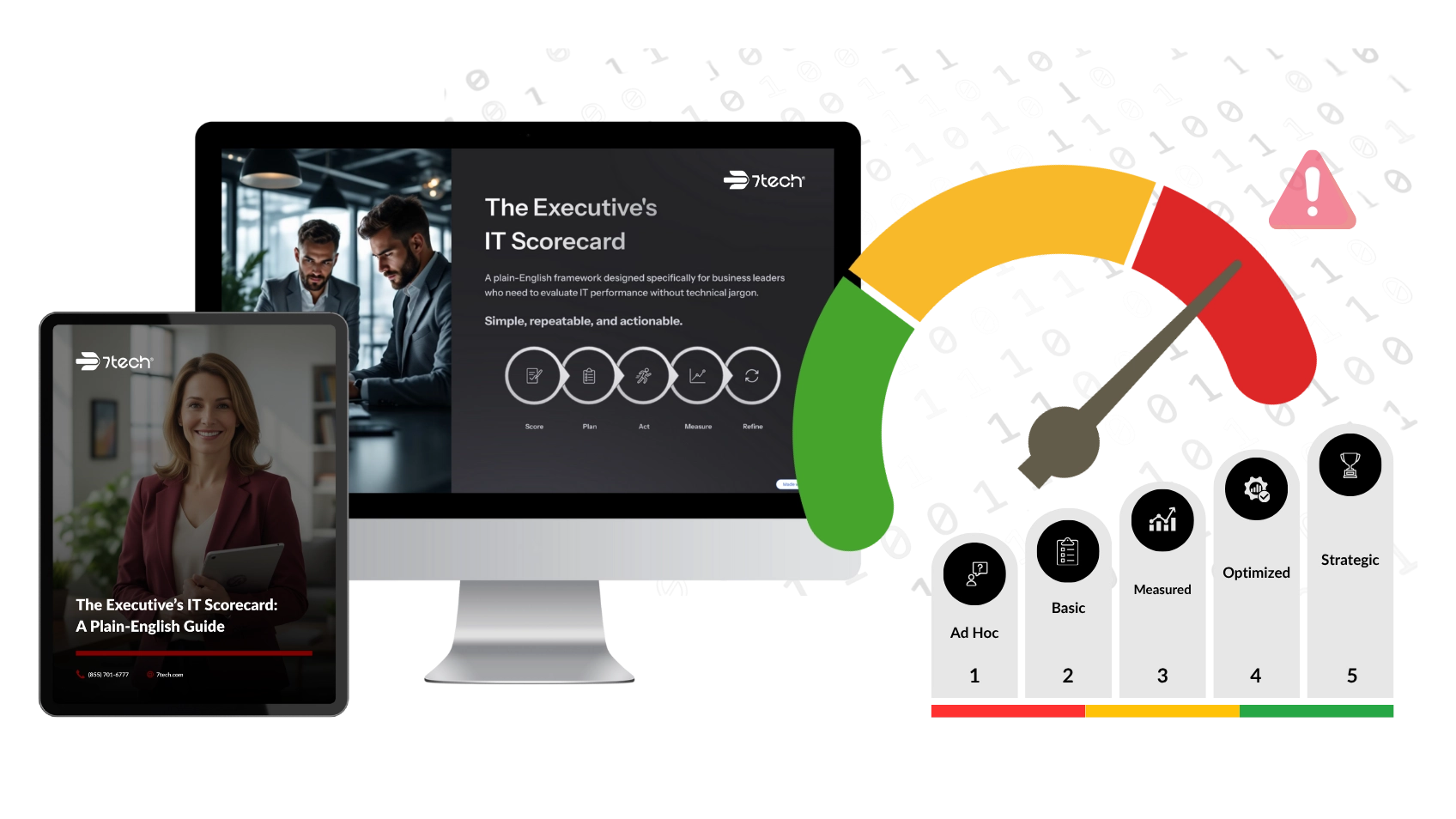
For leaders seeking a broader view of technology governance, an IT scorecard for Texas business executives can complement the findings by placing security alongside operational performance and accountability.
The goal is to turn IT risk visibility into decisions that leadership can approve, track, and defend.
When Should Internal IT Bring in an MSSP or vCISO?
An internal IT team can perform portions of a security stack assessment, particularly when it has strong documentation, sufficient expertise, and visibility across the entire environment.
Outside support becomes valuable when the complexity of the security environment exceeds the team’s available capacity or specialized capabilities.
This may occur when a business requires continuous monitoring, manages numerous security products, faces increased regulatory expectations, or needs an independent perspective on the effectiveness of its controls.
A managed security service provider (MSSP) can help evaluate monitoring, detection, response, and operational security coverage. Understanding what an MSSP does helps leadership distinguish specialized security operations from general IT support.
A virtual Chief Information Security Officer (vCISO) can provide strategic guidance on risk priorities, governance responsibilities, compliance planning, and executive reporting.
These roles address different needs:
- Internal IT: Maintains business systems, supports users, and manages day-to-day technology operations.
- MSSP: Provides specialized security capabilities, monitoring, and response support according to its service scope.
- vCISO: Helps leadership establish security direction, interpret risk, and oversee improvement priorities.
The right arrangement depends on what the organization already does well and where additional expertise is genuinely needed.
For example, a mid-sized manufacturer may have a capable internal IT department that manages infrastructure and business applications but lacks the resources for continuous threat investigation.
An MSSP can complement that team rather than replace it.
At 7tech, our managed security services are supported by a private, US-based Security Operations Center. We combine security operations expertise with plain-language reporting designed to help leadership understand meaningful risks and responsibilities.
Our approach is to help organizations clarify the protection they have, identify what needs improvement, and determine the most appropriate next steps, rather than assume that every assessment should result in additional products or a provider change.
What Should You Do After a Security Stack Assessment?
The value of an assessment comes from what the organization does with its findings.
A report that identifies problems but does not establish responsibility or a plan for improvement offers limited long-term value.
After completing a security stack review, leadership should take five actions.
1. Prioritize the Findings by Business Impact
Start with weaknesses that could materially affect critical operations, sensitive information, or compliance obligations.
Confirm which issues require immediate attention and which can be addressed through planned improvements.
2. Improve Existing Controls Before Expanding the Stack
Review whether configuration changes, better integrations, or clearer operating procedures can close identified gaps.
Where tools are genuinely redundant, consider consolidation only after confirming that necessary protection will remain intact.
3. Strengthen Monitoring and Response Accountability
Confirm who receives important alerts, who investigates them, who can authorize corrective action, and how significant incidents reach leadership.
Where necessary, document escalation paths and test whether the response process works as expected.
4. Align Security Improvements With Business Obligations
Connect assessment findings to contractual, regulatory, and insurance requirements.
For organizations with specific obligations, such as defense contractors, CMMC compliance support may help translate security gaps into a more structured readiness plan.
5. Establish Ongoing Ownership and Review
Security environments change as employees join, vendors change, new applications are deployed, and business operations expand.
Assign owners to corrective actions, establish verification requirements, and schedule future reviews.
NIST’s enterprise risk management guidance supports this approach by connecting cybersecurity risk information to broader organizational decision-making.
A repeatable security controls review helps leadership maintain visibility as the business evolves.
The final objective is not to create a perfect-looking security inventory. It is to establish a defensible process for knowing where the company stands, what needs attention, and who is responsible for progress.
Frequently Asked Questions About Security Stack Assessments
What is a security stack assessment?
A security stack assessment evaluates how an organization’s cybersecurity tools, controls, integrations, and operational processes work together. It identifies security gaps, redundant products, configuration weaknesses, and accountability issues so leadership can prioritize improvements.
How often should a business review its security stack?
An annual review is a practical starting point, with additional assessments after major changes such as acquisitions, cloud migrations, new compliance requirements, significant incidents, or security provider transitions. Higher-risk environments may require more frequent evaluations.
Is a security stack assessment the same as a cybersecurity risk assessment?
No. A cybersecurity risk assessment evaluates threats, vulnerabilities, and potential business impacts across an organization. A security stack assessment focuses specifically on whether existing protective technologies and operational controls provide appropriate, coordinated coverage.
What is the difference between a security stack assessment and a penetration test?
A security stack assessment evaluates how protective controls, tools, and processes work together. A penetration test uses authorized offensive testing to identify exploitable weaknesses. Both provide useful information, but they evaluate different aspects of cybersecurity readiness.
Who should be involved in a security stack assessment?
Internal IT, security personnel, relevant service providers, and an executive accountable for risk should participate. Compliance, finance, and operational leaders may also contribute when findings affect regulatory obligations, spending, or critical business processes.
Can an internal IT team perform a security stack assessment alone?
Yes, if it has sufficient expertise, time, and access to the relevant systems and documentation. An MSSP or vCISO can provide specialized security knowledge, independent perspective, or additional capacity when needed.
Get Clear Visibility Into Your Cybersecurity Before Making Your Next Investment
Your business may already have many of the security tools it needs. The more important question is whether those tools deliver coordinated protection, meaningful monitoring, and clear accountability.
7tech helps business leaders understand their current security environment before deciding what needs to change.
Whether you have an internal IT team, work with multiple providers, or are reconsidering your cybersecurity strategy, an IT Network Assessment can help clarify existing coverage, potential gaps, unnecessary overlap, and where further evaluation is needed.
Schedule Your Free IT Network Assessment
Prefer to discuss your needs first? Schedule a Free 15-Minute Discovery Call to explore which type of evaluation is appropriate.
Clarity before commitment. Confidence before change.

Neal Juern, Founder and CEO of 7tech, helps business leaders take control of their IT and strengthen cybersecurity without the complexity. Since founding 7tech in 2012, he’s built it into a 5X MSP 501 winner and guided hundreds of executives toward smarter, safer operations through Managed IT Services and Managed Security Services that make sense to people outside the IT department. He speaks regularly to executive and nonprofit audiences across Texas.